What is RCS messaging? A guide to Rich Communication Services
RCS turns a plain text channel into something closer to a real conversation — media, receipts, suggested actions and all. Here's the full picture.
RCS, or Rich Communication Services, is a messaging standard designed to provide a richer and more interactive experience than traditional SMS.
Instead of limiting conversations to plain text, RCS can support features such as high-quality images and videos, read receipts, typing indicators, suggested actions, rich cards, carousels, and other interactive elements. The GSMA's RCS Universal Profile defines a common set of capabilities intended to make RCS more consistent across participating networks and devices.
For businesses, this creates another way to communicate with customers directly through messaging, while adding branding, media, and interactive actions to the conversation. But what exactly is RCS, how does it work, and how is it different from SMS?
How does RCS messaging work?
RCS works through the mobile messaging ecosystem rather than requiring customers to download a separate app specifically for it.
The technology is based on the GSMA's RCS Universal Profile, an industry specification designed to improve interoperability between operators, devices, and messaging platforms. The profile defines capabilities such as chat, group messaging, file sharing, capability discovery, and business messaging.
For consumers, RCS can therefore appear as part of their existing messaging experience whenever it's supported by their device, messaging client, and network. For businesses, RCS introduces business messaging — letting brands send richer messages and build interactive experiences inside supported messaging clients.
What features does RCS offer?
One of the main differences between RCS and traditional text messaging is the range of features available.
Rich media
RCS supports richer media experiences, including images, video, and other file types, and newer versions of the Universal Profile continue to expand media capabilities and quality. That gives businesses more ways to present products, services, offers, and information than a text-only message can.
Read receipts and typing indicators
RCS can provide read receipts and typing indicators, giving both sides more visibility into the status of a conversation — among the features that distinguish it most clearly from traditional SMS.
Suggested actions and replies
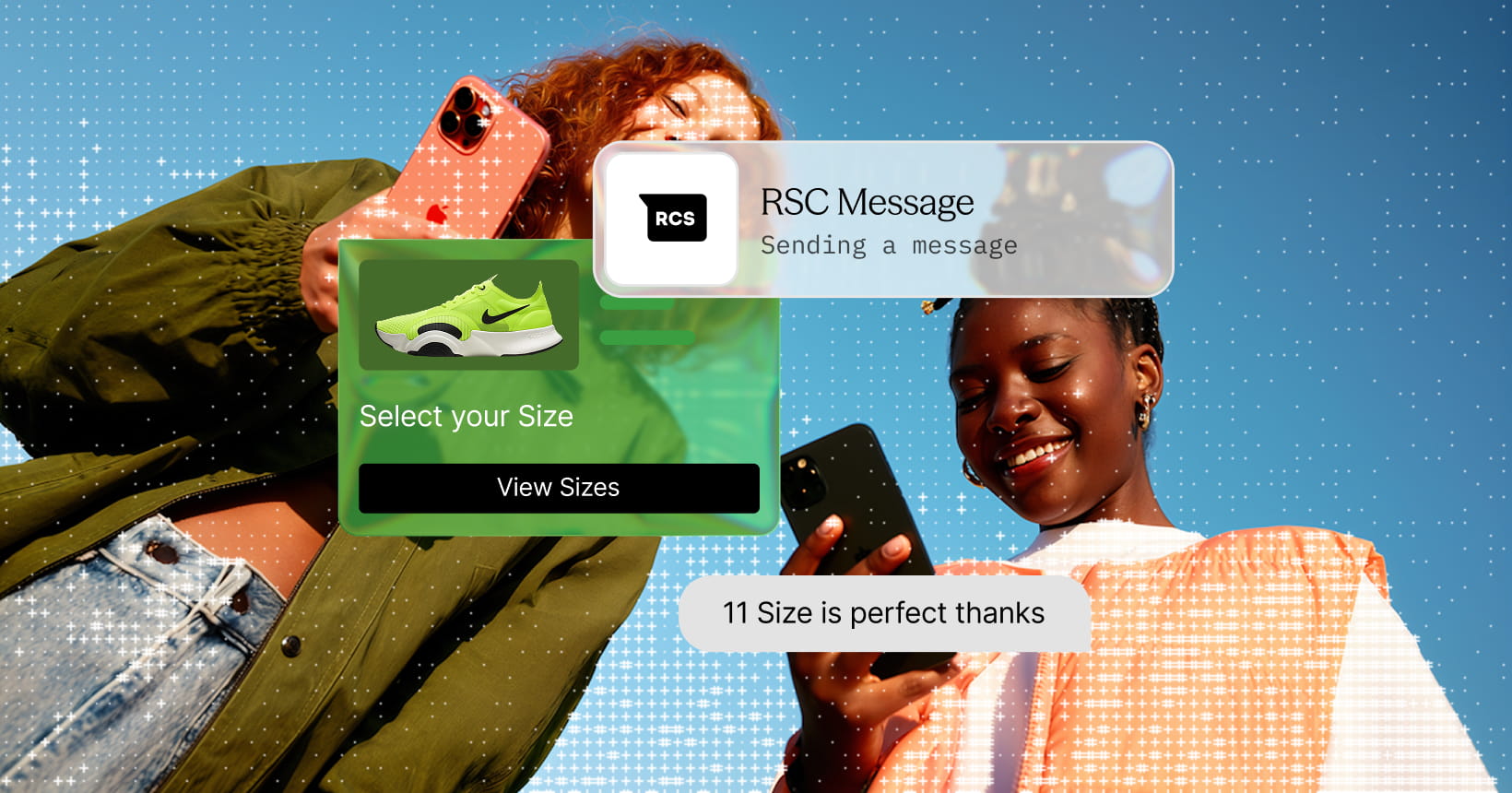
RCS business messages can include suggested actions and replies that let customers interact with a message rather than simply reading it. A business could provide actions such as:
- Open a website
- Call a business
- View a location
- Add something to a calendar
- Continue a conversation
Google's current RCS for Business documentation supports suggested actions and interactive messaging experiences. RCS for Business rich cards
Rich cards and carousels
Businesses can also use rich cards and carousels to present visual information and multiple options within a single conversation — useful for things such as:
- Product recommendations
- Promotions
- Restaurants and menus
- Travel offers
- Service options
- Customer support flows
RCS for Business supports rich cards, media, and suggested actions as part of its business messaging capabilities. RCS for Business best practices
What is RCS business messaging?
RCS Business Messaging lets companies use RCS capabilities to communicate with customers through richer, branded messaging experiences.
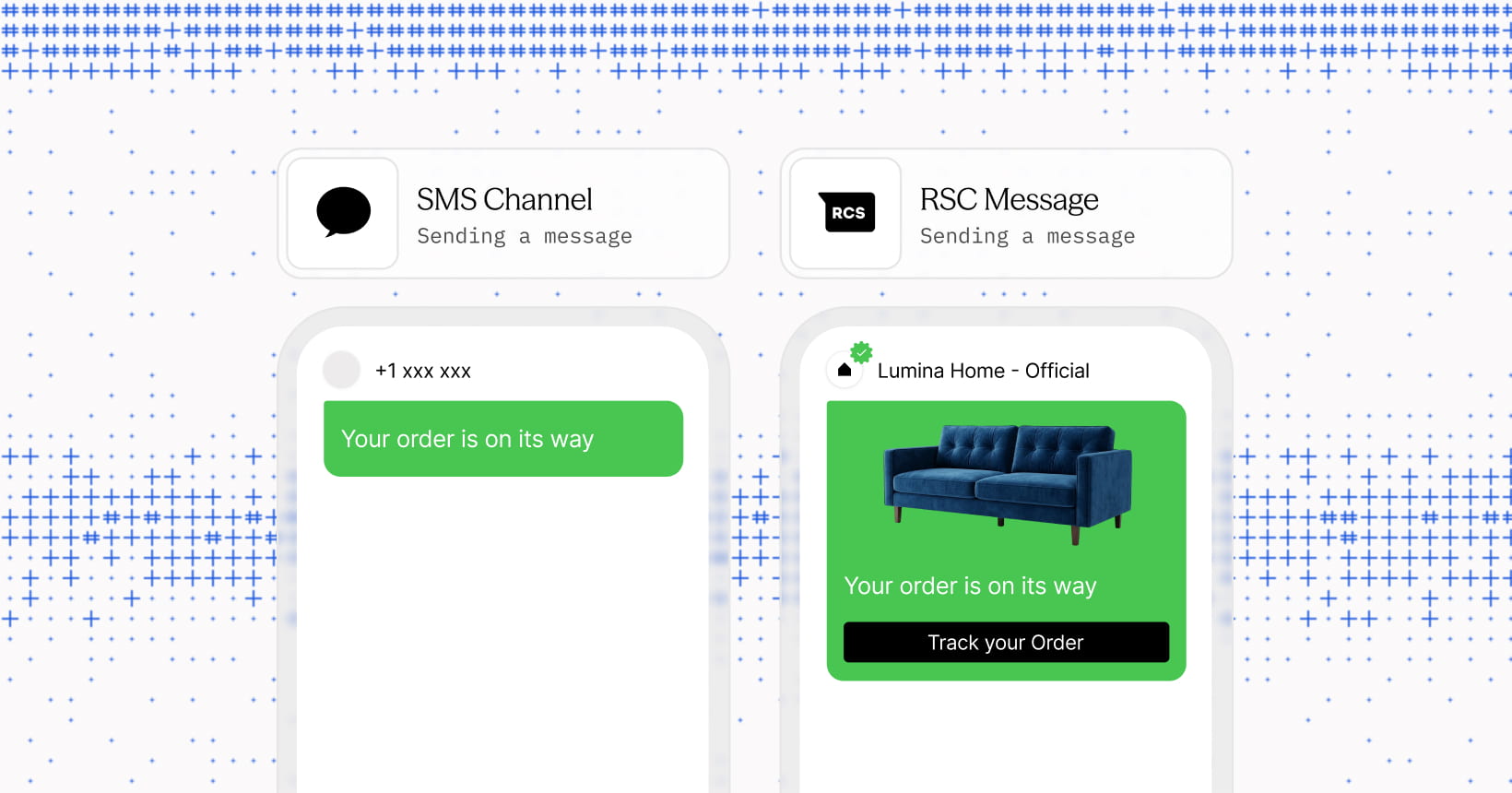
Instead of sending only a plain text message — "Your order has shipped. Track it here: example.com" — a business can build a richer experience with branding, visual content, and actions directly inside the conversation. Depending on the use case, businesses can use RCS for:
- Marketing campaigns
- Promotions and offers
- Product discovery
- Customer notifications
- Appointment reminders
- Customer support
- Conversational experiences
- Transactional communications
RCS isn't simply about making text messages look better. Its broader purpose is to make messaging more interactive and actionable.
RCS vs SMS: what's the difference?
The simplest way to understand the difference: SMS is primarily a text messaging channel, while RCS adds richer media and interactive capabilities to the messaging experience.
| Capability | SMS | RCS |
|---|---|---|
| Text messaging | ✓ | ✓ |
| Rich media | Limited | ✓ |
| Read receipts | — | ✓ |
| Typing indicators | — | ✓ |
| Suggested actions | — | ✓ |
| Rich cards | — | ✓ |
| Carousels | — | ✓ |
| Branded business experiences | Limited | ✓ |
| Interactive conversations | Limited | ✓ |
However, RCS doesn't necessarily make SMS irrelevant. The two serve different purposes, and RCS implementations can include fallback mechanisms for when richer messaging isn't available.
Why is RCS important for businesses?
The biggest opportunity with RCS is that it can turn messaging from a primarily text-based notification channel into a richer customer interaction channel.
Consider a promotional message. With traditional SMS, a company might send "20% off all shoes today. Shop now: example.com." With RCS, the same campaign could include product imagery, richer content, and suggested actions right inside the messaging experience.
That gives customers more room to discover, interact, and act without relying entirely on a plain text message and a manually opened link — which makes RCS particularly relevant to customer engagement, commerce, marketing, and conversational experiences.
Is RCS available everywhere?
RCS availability depends on the device, messaging client, carrier, and market. The GSMA Universal Profile is meant to provide a common technical foundation across the ecosystem, but support and specific capabilities can still vary.
The standard is also continuing to evolve. In 2026, the GSMA published Universal Profile 4.0 and 4.1 specifications, adding and refining capabilities around richer media, business messaging, interoperability, and security. That's worth watching for any business evaluating RCS, since the channel is still developing rather than being a static replacement for traditional messaging.
The future of business messaging
RCS is part of a broader shift toward richer, more interactive customer communications. Traditional SMS remains useful for straightforward text-based communication, while RCS gives businesses additional capabilities when visual content, branding, and interaction matter.
The practical question for most businesses isn't "RCS or SMS?" It's how each channel fits into a broader messaging strategy — which is exactly what the comparison below walks through. RCS vs SMS: what's the difference and which should businesses use?