Sent vs Telnyx: Go beyond managing message infrastructure
Compare Sent and Telnyx on automatic routing, customer setup and repeat-message costs. See how Sender Profiles and contact-based platform pricing fit your workflow.
Compare the workflow behind every message
Both platforms support multichannel messaging and fallback. Compare automatic channel selection, customer setup and the full cost of delivery.
| What matters | Telnyx | |
|---|---|---|
| Channels | SMS, WhatsApp and RCS | SMS, WhatsApp and RCS |
| Delivery workflow | Automatic channel selection when the channel is left unpinned. | Configure messaging profiles and senders. RCS supports automatic fallback to SMS when configured. |
| Customer setup | Sender Profiles inside your organization. | Create managed accounts through the API after manager-account approval, then configure customer messaging resources. |
| Pricing model | Contact-based platform fee plus delivery at cost. | Usage per message part, with carrier fees added separately. No separate platform fee. |
| Carrier charges | Message delivery is passed through at cost, alongside the contact-based platform fee. | Carrier fees are passed through separately from message usage charges. |
| Repeat messages | No additional platform fee within the billing period; delivery still adds cost. | Each additional billable message part adds usage and applicable carrier charges. |
| Delivery tracking | Dashboard, API and webhook status tracking. | Messaging delivery events and webhooks. |
7 comparison points
Compare costsCompare the cost of your conversations
Look at active contacts, message frequency and delivery costs together.
Sent
$0.015 per active contact
One platform fee per billing period, plus message delivery at cost. Repeat messages do not add another platform fee.
Telnyx
Pay-as-you-go programmable channels
Telnyx bills per message part, with no separate platform fee. Carrier fees are passed through separately; numbers, registration and lookup can add costs.
| Contacts / messages | Telnyx | Difference | |
|---|---|---|---|
| 100K contacts300,000 messages | $3,090Observed billing projection | $4,260Observed billing projection | −$1,170 |
| 500K contacts1,500,000 messages | $15,450Observed billing projection | $21,300Observed billing projection | −$5,850 |
| 1M contacts3,000,000 messages | $30,900Observed billing projection | $42,600Observed billing projection | −$11,700 |
Illustrative US SMS projection: Sent $0.015/contact + $0.0053/message; Telnyx $0.0142/message including recorded carrier fees. Small, unmatched samples: 380 Sent / 21 Telnyx messages, checked 14 Oct 2026. Three single-segment sends/contact in one 28-day window; excludes number, registration and negotiated rates. Not a quote.
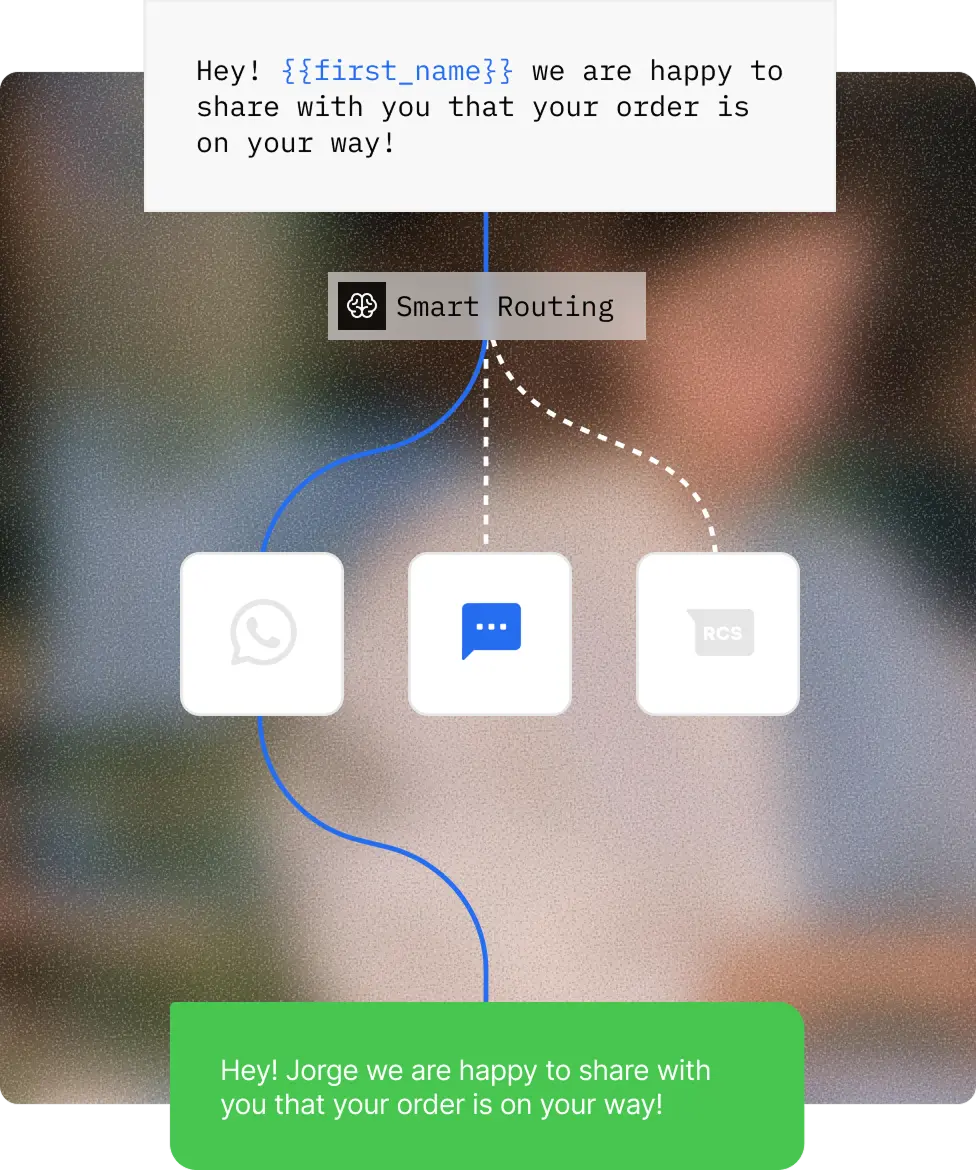
Let the message find its channel
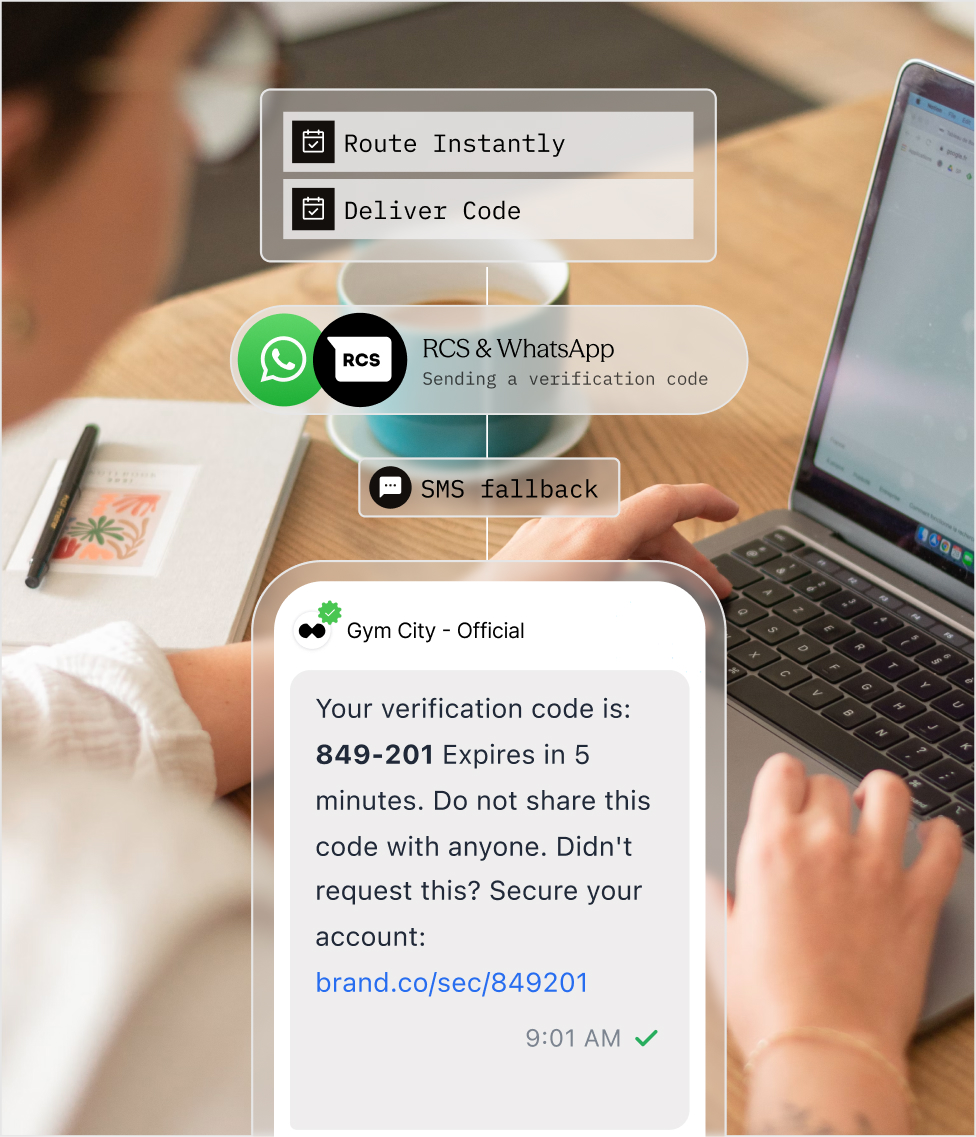
Routes messages to the best available channel, transforms templates for that channel, and respects configured quiet hours. Leave the channel unpinned to use automatic routing.
Telnyx: Configure messaging profiles and senders. RCS messaging supports automatic fallback to SMS when configured.
Build customer messaging into your product
Create a Sender Profile within your organization; send for that customer by passing its profile ID.
Telnyx: Create managed accounts through the API after manager-account approval, then configure each customer’s messaging resources.
Before you switch
No. Sent charges its platform fee once per active contact, so the saving grows with how often you message the same people. The sample above sends three messages to each contact in a billing period. If most of your contacts hear from you only once, paying per message part can cost less. The estimator on the pricing page works it out for your own mix.
On Sent, each customer you send for is a Sender Profile inside your own organization, and you send on their behalf by passing that profile’s ID. On Telnyx, each customer is a managed account, created through the API after manager-account approval, with its own messaging resources configured.
Yes. Sender registration, such as A2P 10DLC in the US, WhatsApp business verification and template approvals, is decided by the carriers and by Meta, whichever platform you send through. We run the submissions with you and tell you where each one stands, but the review itself belongs to them.
Start with one flow, such as order updates or verification codes. Route a share of that traffic through Sent, compare delivery against Telnyx on the same messages, and move the rest once the numbers agree. Your current setup keeps running the whole time.