Is RCS finally ready for its moment?
Richer messages, recognizable businesses, and actions inside the inbox. RCS has plenty to offer—but its future depends on how useful brands make it.
Messaging has a familiar problem. A business sends an update, the customer reads it, and the next step happens somewhere else. Open a link. Find the order. Log in. Look for the right button.
RCS offers a chance to shorten that journey. It brings richer content and interactive features into the phone's messaging app, making a message more useful than a few lines of text.
But better features alone don't make a better experience. So, is RCS ready to become an everyday business channel?
What is RCS, exactly?
RCS stands for Rich Communication Services. It adds capabilities such as high-resolution photos and videos, typing indicators, and delivery and read receipts to supported messaging conversations. On iPhone, it requires iOS 18 or later and a supporting carrier. Apple's guide to RCS
For businesses, RCS can also support rich cards, suggested replies, and actions that help customers move through a conversation. A delivery notification, for example, can offer a clear next step instead of leaving someone to work out what to do. How RCS for Business works
The appeal is straightforward: make the inbox a place where customers can get something done.
For businesses, the more useful distinction is between consumer RCS and RCS for Business. RCS for Business is designed for branded, interactive communication between companies and customers. It can combine text with rich media, suggested replies, suggested actions, and business identity inside the messaging experience.
That makes RCS more than an upgraded version of SMS. The bigger opportunity is to turn a message from a notification into a small, actionable customer experience.
Why does it feel more relevant now?
RCS support on iPhone has expanded the conversation beyond Android. That gives businesses another reason to assess where the channel fits.
However, support for everyday RCS conversations should not be treated as proof that every customer can receive every business messaging feature. Teams still need to check availability for their audience, markets, and messaging provider.
The practical question is becoming more specific: which customer interactions would benefit from a richer message?
An appointment reminder, a delivery update, or a simple support exchange is a useful place to start. Each has a clear purpose and an obvious next action.
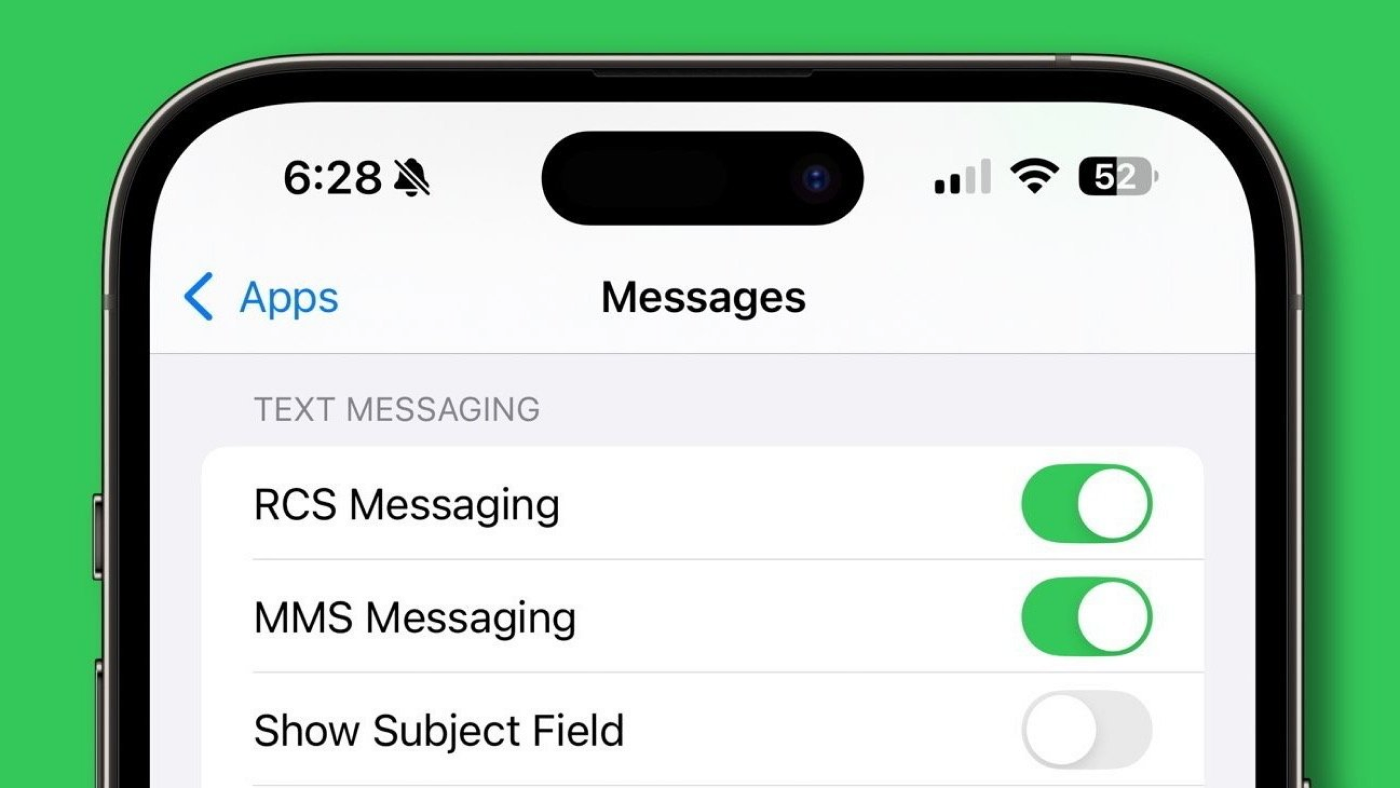
The important point is that RCS availability is not simply an "RCS or no RCS" decision. Device capabilities, carrier support, market availability, and the specific RCS features being used can all affect the experience. Businesses should therefore design around capability checks and fallback options rather than assuming every recipient will see the same message.
Where richer messaging actually helps
Imagine a customer waiting for a delivery.
A basic notification tells them the package is on its way. A thoughtfully designed RCS experience could show the order details and offer actions such as "Track delivery" or "Contact support."
The improvement is fewer decisions and less searching.
The same principle applies to other journeys:
- Appointments: Make confirming or requesting a different time easy.
- Shopping: Present relevant products with images and clear links.
- Support: Offer useful response options that help explain the problem.
- Travel: Keep booking details and the next step close together.
RCS supports actions such as opening a website, dialing a number, or viewing a location, depending on the features available to the recipient. Some actions will still take the customer into another app or page. RCS business messaging features
For ecommerce teams, this creates an especially interesting use case. An RCS message can move beyond "your order has shipped" and provide product imagery, order information, tracking actions, or a route back into the shopping journey. The same principle applies to abandoned carts, product discovery, appointment reminders, and customer support: the message should reduce friction rather than simply add another notification.
A richer message earns its place when it makes the customer's next step easier.
RCS vs SMS: when is richer messaging actually better?
RCS does not make SMS obsolete. The two channels solve different problems. SMS remains valuable because of its broad reach and simplicity, while RCS is most useful when a customer interaction benefits from branding, richer content, or interactive actions.
For example, a one-time authentication code may not need a rich card or product image. A delivery update with tracking, support, and order information may benefit considerably more from the richer RCS format.
A practical way to think about RCS vs SMS is this:
| Channel | Best suited for | Main strength |
|---|---|---|
| SMS | Authentication, urgent alerts, basic notifications | Broad reach and simplicity |
| RCS | Rich notifications, commerce, support, interactive journeys | Rich media, branding, and actions |
| Two-way conversations and customer support | Conversational interaction |
The strongest messaging strategy is therefore not necessarily to replace SMS with RCS. It is to use the right channel for the job and provide an appropriate fallback when richer messaging is unavailable.
What makes RCS useful for businesses?
The value of RCS business messaging comes from combining several capabilities in one native messaging experience. Rich cards can combine media, text, and suggested actions, while suggested replies can help customers move through a predefined interaction without having to type a response.
This is particularly useful when the next action is predictable. A customer may need to track a delivery, confirm an appointment, find a store, contact support, or browse a small set of products. Instead of making the customer interpret a message and decide what to do next, the message can present the relevant action directly.
That does not mean every RCS message should contain as many features as possible. Google's own RCS guidance recommends keeping suggestions relevant and limiting actions to what is useful for the immediate interaction. More interactivity is only better when it removes friction.
Recognition matters as much as interaction
Before customers act on a message, they need to understand who sent it.
RCS business profiles can display a company's identity, and verified agents carry a verification mark. These cues help people recognize the sender. Google's RCS design guidance
Still, branding cannot do all the work. A recognizable business can send an irrelevant, confusing, or badly timed message.
Trust also comes from the content: explain why you're contacting someone, make the requested action clear, and respect their choice to stop receiving messages.
That identity layer is one of the more important differences between RCS business messaging and traditional SMS. In RCS for Business, brand verification can help establish that the business behind the conversation is legitimate. Google describes brand verification as a prerequisite for launch, with verified agents displaying a verification checkmark in Google Messages.
But verification should be treated as one part of trust, not a substitute for good messaging. Customers still need to recognize the context, understand why they are receiving the message, and see a clear reason to engage.
Where RCS can fall short
RCS also has limitations, and they matter when designing a messaging strategy. Feature availability can vary by device and carrier, and rich cards or other interactive elements may not render identically across every supported environment. Google recommends checking recipient capabilities and testing experiences on target devices.
That means businesses should avoid building critical customer journeys around a feature that may not be universally available. For important messages, a fallback path—often SMS—can be part of the overall channel strategy.
There is also a strategic risk in treating RCS as another place to send more messages. Richer formatting does not solve notification fatigue. If the underlying message is unnecessary, making it more visual or interactive only makes the interruption more elaborate.
So, is RCS ready for its moment?
RCS is ready for businesses willing to use it for the right interactions.
Its opportunity is not simply better-looking SMS. It is the possibility of making the message itself part of the customer journey: recognizable, useful, and actionable without immediately sending someone somewhere else.
The winners will not be the brands that add the most buttons or the richest media. They will be the ones that understand when a richer message genuinely removes friction.
For businesses evaluating RCS in 2026, the better question is not "Should we replace SMS with RCS?" It is "Which customer journeys become meaningfully better when the message can carry more context and more useful actions?"
If the answer is delivery tracking, appointment management, product discovery, customer support, or another interaction with a clear next step, RCS has a compelling role to play. If the message simply needs to arrive reliably and be understood quickly, SMS may still be the better tool.
RCS is therefore less about replacing the old messaging stack and more about giving businesses another layer of capability when the customer experience calls for it.