Can customers tell who's really messaging them?
Impersonation does not only cost the customers who fall for it. It costs every legitimate sender the benefit of the doubt.
Ask most people how they tell a real message from a fake one and the answer is some version of: I do not, really. I just do not click links.
That is a rational response to a channel where anyone can claim to be anyone. It is also a problem for every business whose message genuinely needs acting on.
The problem is bigger than phishing. When customers cannot confidently identify who is messaging them, legitimate businesses inherit the suspicion created by bad actors. Sender identity, consistent communication and verified business profiles are therefore becoming part of the messaging experience itself—not just security infrastructure behind it.
What a customer has to go on
On plain SMS, almost nothing. A number they do not recognize, a name that may or may not be displayed, and a link they have been trained not to trust.
SMS can use a Sender ID—a name or number displayed as the origin of a message—but the exact capabilities and protections vary by country and messaging route. Sender IDs can help customers recognize a business, but they are not, by themselves, proof that a message is authentic.
Richer channels give more to work with: a verified business profile, a logo, a display name that cannot be claimed by someone else. Verification is doing real work here, because it moves the question from "does this look right" to "has this sender been checked".
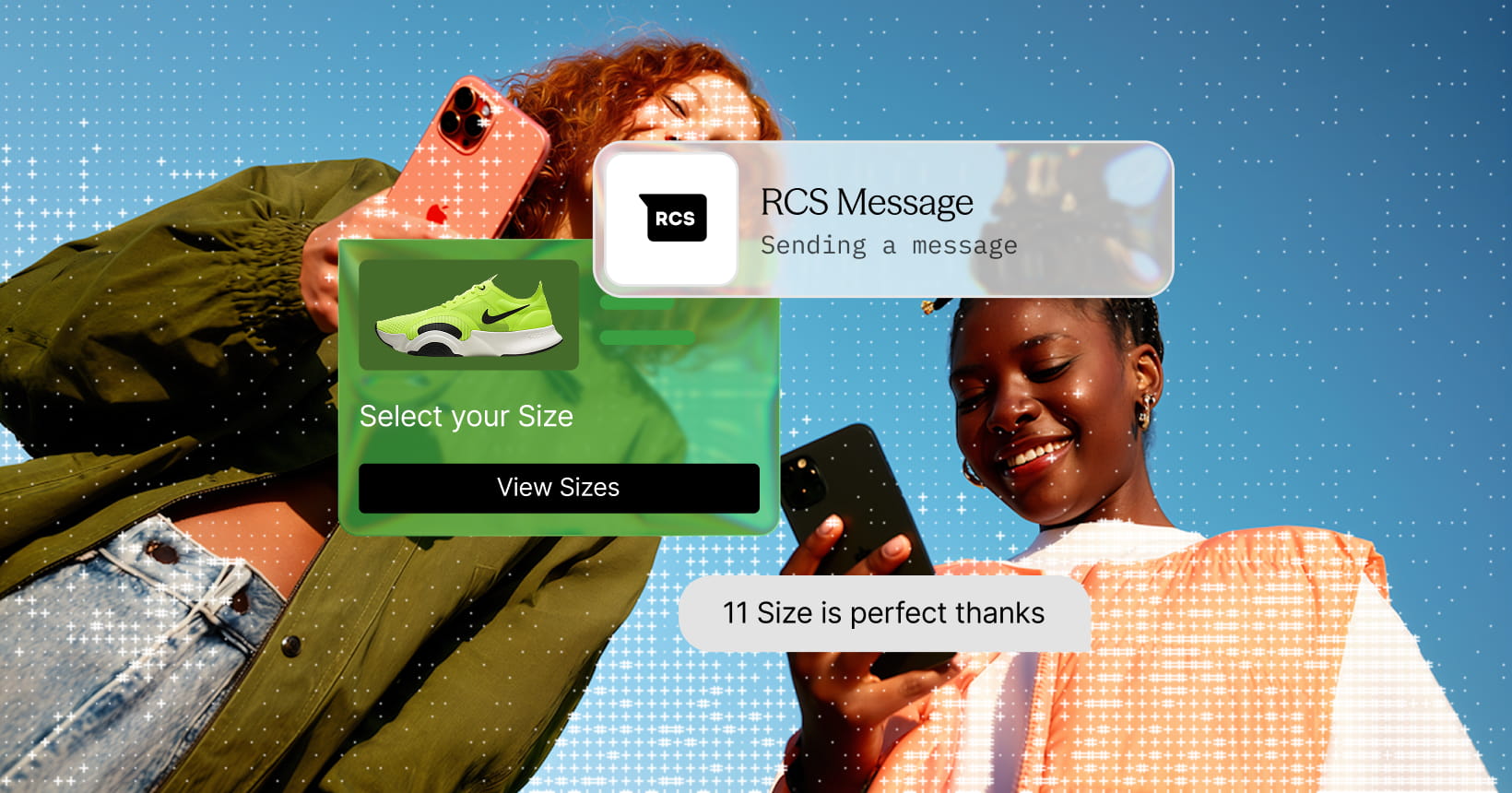
RCS for Business makes this distinction more explicit. A verified RCS agent can display the business identity, logo and a verification checkmark in Google Messages after completing the required verification process. That gives the customer an additional identity signal that ordinary SMS does not consistently provide.
That does not mean verification makes every message trustworthy. It means the customer has more information with which to evaluate the sender.
But the mark on the profile is only half of it. Plenty of suspicious-looking messages come from genuinely verified senders.
Design carries the other half
The messages customers trust tend to share a shape. They say why they are arriving. They reference something the customer already knows about — an order number, a booking, an action taken minutes ago. They ask for one thing. And they never need an urgent decision.
A verified identity works best when the message itself behaves consistently with that identity. A recognizable sender cannot compensate for a message that suddenly asks for sensitive information, uses an unfamiliar link, or creates artificial pressure.
- Context: Name the thing this is about before asking for anything.
- Consistency: Same sender, same name, same tone, every time.
- No urgency theatre: Pressure is the single most common tell of a scam.
- Nothing secret: Never ask for a password, a code, or a payment detail in the thread.
These principles are consistent with guidance from the UK National Cyber Security Centre, which recommends clear and consistent business communications, avoiding panic-inducing language, limiting unnecessary links, and making it clear what a business will and will not ask customers to do.
The practical rule is simple: the message should give the customer enough context to understand why it exists before it asks them to do anything.
Verification helps, but it does not replace judgment
There is an important distinction between sender verification and message safety. Verification establishes something about the sender's identity or authorization; it does not automatically validate every request contained in a message.
That distinction matters as business messaging becomes richer. RCS can provide branded agents, rich cards, suggested actions, and visible URLs, giving customers more context than a bare SMS. Google has even introduced URL transparency for RCS suggested actions so users can see the underlying destination before opening it.
More information can reduce uncertainty, but it also creates more responsibility for the sender. A polished interface can make a bad request look more convincing, which is why identity, context, and message design have to work together.
The sender should be recognizable before the customer has to think
The strongest business messaging experiences do not make customers solve an identity puzzle. The sender name, conversation history, message context, and destination should reinforce one another.
If a customer receives an order update, the sender should match the business they ordered from. If the message contains a link, the destination should make sense in relation to that business. If the customer is being asked to complete an action, the reason for that action should already be clear.
This is partly a security principle and partly a usability principle: the less interpretation a customer has to do, the less opportunity there is for uncertainty.
Consistency matters across channels too. If a company uses one name in SMS, another in email and a third in its support experience, customers have to work harder to determine whether the communications belong to the same organization. The NCSC similarly recommends keeping sender identities and communication methods consistent, so legitimate messages are easier to distinguish from fraudulent ones.
It is a shared problem
Every business sending a message that looks like a scam makes the next legitimate message harder to trust, including its own. Registration, verification and consistent branding are worth the paperwork for that reason alone: they are how the channel stays usable for everybody.
The problem is becoming important enough that messaging providers and regulators are putting more emphasis on sender verification and anti-spoofing controls. In the UK, Ofcom introduced new rules in 2026 requiring providers to corroborate business Sender IDs and take measures against fake sender names used in scam messages.
For businesses, that changes the role of sender identity. It is no longer just a technical configuration made before a message is sent. It is part of the customer's decision about whether the message deserves attention.
The best business message therefore does three things before it asks for anything: it makes clear who is speaking, why they are speaking, and what the customer is expected to do. Verification can strengthen the first. Good message design has to handle the other two.
Trust in messaging is not created by a badge alone. It is created when identity, context, consistency, and behavior all tell the same story.